If you are going to get dumped, it may as well be in the Mahale Mountains

Updated: Mar 9

‘Yeah, I think we should split up’
This delightful curveball came hurtling in from left-field, or should I say left-tent from the man who at 29 years old, I thought I was going to spend a fairly large proportion of the rest of my life with.
BAM. Bloody brilliant. Not.

I was at the time, standing in a large tent at the foot of the Mahale Mountains. Precisely 5,363 miles from home and in the middle of a research trip for a new program which I’d stuck my neck on the line for. And the boyfriend who I’d assured my slightly-tyrannical-but-genius boss ‘would not be a problem’ had just lobbed in this grenade.
Malaria anyone?

To be fair, the research trip had been going pretty spectacularly badly before this even happened. I’d spent a fortnight on Zanzibar supposedly working but in reality lying flat on my back with a sweltering fever wondering whether I had malaria or not. And if I did, whether I was going to risk admitting myself to Zanzibar Hospital (the façade was not encouraging).
However, finding myself not dead at the end of the 14 days (good) I picked myself up, had a little wash and set off for Dar es Salaam where I was meeting the soon-to-be-ex for the final week out to Western Tanzania.

It’s the wild west out there
For those of you who don’t know (and why should you to be honest), Tanzania’s ‘Western Circuit’ is firstly, only for those with the most overly-confident of wallets and secondly, extremely remote.
It’s a takes a full week to explore as it combines two parks – Katavi & Mahale – with some impressive flying times in-between (think hours bumping around in a small plane). But, if you’re up for the travel and you’ve fortunately come into some cash from Great Aunt Jean then I can’t think of a more exciting place to go. In my humble (but extremely-20-years-of-safari-research-experienced opinion) this circuit is one of the most wild and beautiful East Africa has to offer.
Its beauty brings tears to your eyes.
And that’s before you’ve even been dumped.

Katavi - not well connected by transport links

Situated two flying hours from Dar, the park that’s first up – Katavi - is, how shall we put it? Not well connected by transport links.
Yes, there are remote roads accessing it but it would be days of getting lost if you tried to reach it overland. And, as the flights take several hours most give up on it and visit closer parks instead.
Because of this, the sprawling million-acre wilderness has only two tiny tented camps and you will undoubtedly see more lions than you will other people. There are two ways to explore, either in open vehicles on empty dirt tracks, or on foot.
Walking in Katavi is not an experience you will ever forget, unless of course you have a heart attack mid-walk and die on the spot. Not entirely unlikely given the amount of game you’ll be surrounded by.

As I’d recently recovered from imaginary malaria I was well up for a heart attack and so found myself, mid-morning, crouched on the banks of a dry river bed. The guide was pointing out half a dozen crocodiles tucked into mudholes, a herd of elephant were digging for water and on the far bank a marabou stork picked over a hippo carcass (black backed jackal waiting patiently to nip in and grab a scrap).

As if we weren’t surrounded by enough wildlife, a massive herd of buffalo came thundering out of the mopane forest, dust and oxpeckers billowing around them, and straight for us. BOOM!
I can tell you, that sharpens the mind a bit and makes you eternally glad you’re a) behind a wide-trunked mahogany and b) not only with an experienced guide but a scout holding a large rifle. Had I been any closer to the scout’s back I think we’d have had to enter a committed relationship (and little did I know that very shortly I was going to be absolutely available to do so).
Rival operator anyone?

I LOVE the wilderness and thus could have stayed forever. However, time is money (quite literally in the safari business) and so the next day I was on the dirt airstrip, being weighed up with the cases by a meticulous bush-pilot. ‘You’re light, that will work perfectly’ said he as he lobbed me and half a dozen canvas bags in the tail of the plane (with six dozen eggs and some photographic equipment on top for good measure) for the flight from Katavi to Mahale.
If an hour of westbound-airborne-stomach-churning-heat-of-the-day bouncing in the tail of a plane wasn’t enough, just to add a bit of extra pizzazz in the middle seat was a rival operator - or giant toad should I say. He instantly took up a new hobby - baiting me - for the fun of it.
On arrival, this smirking amphibian leapt down from the Cessna, puffed out his dewlap and thrust his slimy hand at the lodge manager who'd come to greet us. I meanwhile, staggered out like a dying wildebeest and collapsed under the wing where I had to lie stock-still, eyes closed for ten minutes (the only way my body can physically recover from acute travel sickness).
I think I impressed the manager but I couldn’t be sure.

The Lazarus of wildebeests
The transfer from Mahale Airstrip however, is one that would revive even the most pathetic of nearly-expired ungulates.
As the runway is cut into the only gap in the mountains, and said mountains drop straight into Lake Tanganyika the only way to get around is by boat.
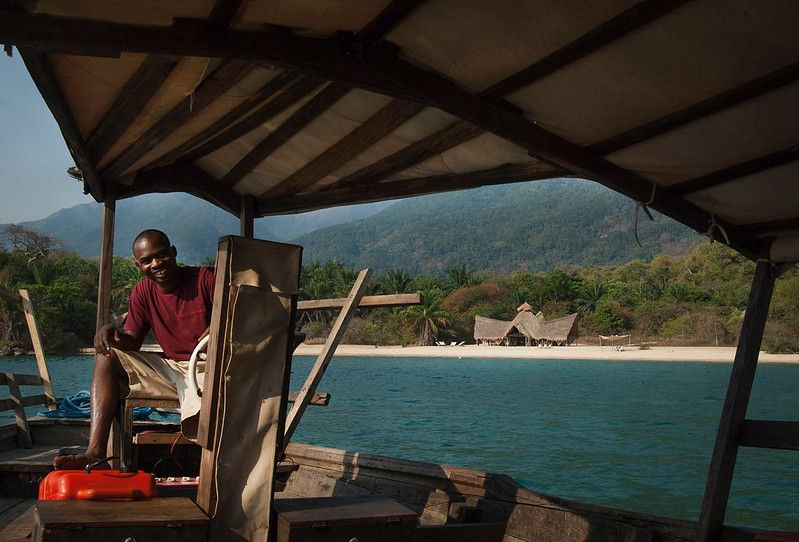
Sitting with legs outstretched on the worn warm planks of an ancient dhow, back against faded cushions the twenty minute sail to Greystoke Camp is idyllic. On arrival you will note that yes, the sand is white and perfect, yes the clear water is full of thousands of brightly colored cichlid fish and yes the camp is luxurious.
Who cares about any of that though? This camp is about one thing, and one thing only. Chimpanzees.

Chimpanzees
The Mahale Mountains are the best place in Africa to track and observe wild chimpanzees. With a population of around 1,000, one troop, the Mimikire clan, has been carefully habituated to humans by a team of researchers. Totally wild, this group of around 100 individuals can therefore be observed from close quarters.

Climbing the leafy tracks in the misty morning you will hear the chimps before you see them. The first shriek of a chimpanzee that splits the air will make all the hair on the back of your neck stand up.
Finding them, crouching low and avoiding eye contact, you can observe them hunt, forage, play, groom and, in the case of the Alpha male when I was there, brandish an enormous branch and come hurtling down a forest path towards you to assert dominance.
Whilst you do all this, heart in your mouth, bluecheeked bee-eaters skit through the trees, there are shufflings in the undergrowth (probably warthog) and coloured butterflies flit above the streams.
Once your time is up, you wander back down the track to have lunch on the sand before returning to your tent to get your swim kit.
And then, in my case, just to round off the day nicely, you get dumped.
The dumping ground
My sister-in-law always says that one should never ever be smug. Because just when you are confidently thinking that everything is going swimmingly, life comes along and bowls you a googly.

In my case, at 29, I wasn’t actually even vaguely smug as things hadn’t been going brilliantly in the first place. I’d been doggedly looking for a new job for months and had already been turned down by 17 organizations (yes! I’m a high achiever!).
The research trip had been one of sweat and tears (thankfully no blood) and all together things could have been a little less sub-optimal even before the googly came bowling along.

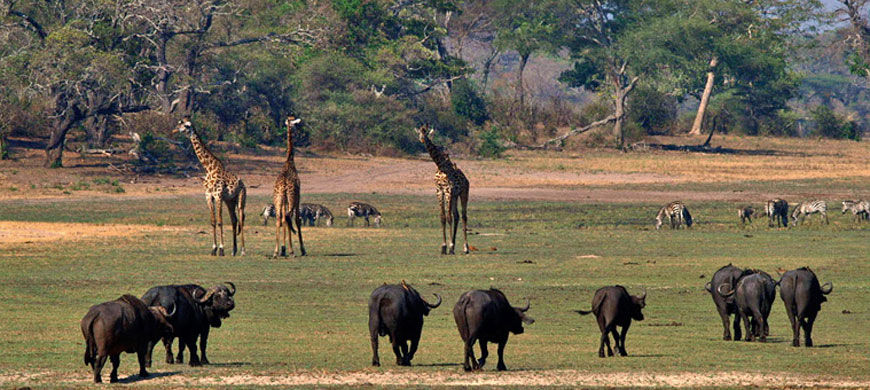
When I look back on the trip however, it’s not the bad bits that remain. Seared on my memory are the huge herds of the Katasunga Plains in Katavi with vast and empty skies overhead.
I remember the crunchy feel of the coarse sand of Greystoke Beach in Mahale, the incredible clarity of the lake and most of all the chimpanzees. I will never forget sitting, just the guide and I, watching Fanana, one of the big male chimps of the time, carefully pick apart the remains of a colobus monkey and share it with two others.
Plus, a few days later, sitting sadly on the steamed-up airport bus taking me into London, little did I know that waiting for me at home was a phone call (actually five missed calls) that was about to change my life forever.


Comments